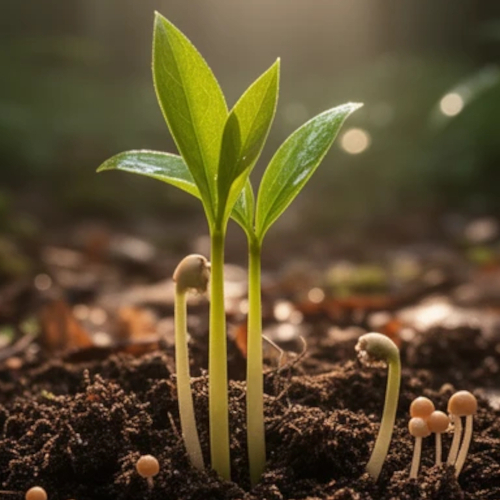
Plant And Mushroom Germination
April 27, 2026
The miracle of life beginning from a dormant state is one of nature's most fascinating processes. Whether you are a gardener looking to start your spring vegetables or a hobbyist mycologist curious about the fungal kingdom, understanding plant and mushroom germination is the foundation of success. While both processes involve a transition from a resilient package of genetic material into a living, growing organism, the biological mechanisms at play are worlds apart.
Part I: Awakening Of The Seed
For vascular plants, germination is the process by which an embryo develops into a seedling. A seed is essentially a biological time capsule, containing a tiny plant, a food source (the endosperm), and a protective outer layer (the seed coat).
Seed Germination
To break dormancy, most seeds require a specific set of environmental triggers:
- Imbibition: The seed absorbs water, causing it to swell and rupture the seed coat.
- Oxygen: Respiration increases, requiring steady airflow through the soil.
- Temperature: Most temperate seeds require warmth, though some need a period of cold (stratification) to reset their internal clocks.
As the embryo consumes its stored energy, the first structure to emerge is the radicle (the primary root), followed by the hypocotyl (the shoot). Once the first true leaves appear and begin photosynthesis, the transition from seed to seedling is complete. Mastering plant and mushroom germination requires patience, as different species — from peppers to poppies — have wildly different timelines.
Part II: The Fungal Frontier — Spores And Mycelium
Mushrooms do not have seeds; they have spores. Unlike seeds, spores do not contain a pre-formed embryo or a large food cache. This makes the stage of germination in the fungal world much more delicate and reliant on a nutrient-rich substrate.
From Spore To Hyphae
When a fungal spore lands in a hospitable environment, it sends out a microscopic filament called a 'hypha'. When two compatible hyphae meet, they fuse to form a more complex network known as 'mycelium'.
In the context of cultivation, we often refer to 'spawn' rather than 'seedlings'. Spawn is simply a carrier (like grain or sawdust) that has been fully colonized by mycelium. Introducing this spawn into a larger substrate is the fungal equivalent of transplanting a sprout into a garden. The appearance of a white, thread-like growth of mycelium, is the first sign of successful mushroom germination.
Part III: Bridging The Gap — Commonalities In Growth
While the biology differs, the environmental stressors remain similar. Both seeds and spores are susceptible to 'damping off' or contamination, if the environment is too wet or lacks airflow.
- Hygiene: Clean growing media prevents the contamination of seedlings and mushroom spawn.
- Consistency: Fluctuations in humidity can stall a germinating seed or dry out delicate hyphae.
Achieving a high success rate in plant and mushroom germination is about creating a buffer zone, where the organism is protected from the elements until it is strong enough to defend itself.
Part IV: Practical Tips For Success
If you are starting this journey at home, focus on the big three: Moisture, Media, and Microclimate. For seeds, a heat mat can shave days off the wait time. For mushrooms, a 'still air box' (SAB) is the best way to ensure your spores germinate without competition from mold.
By respecting the unique biological needs of these organisms, you can transform a handful of dust-like spores or hard, dry seeds into a thriving ecosystem. Whether you are growing food for the table or medicine for the soul, plant and mushroom germination is the essential first step in the cycle of their lives.
Organic Gardening Guide
Grow organic food at home. Step-by-step preparation, cultivation, and harvesting guide. Don't leave your food security to chance. Learn how to transform your backyard into a high-yield organic oasis.
Get Your Copy Today!