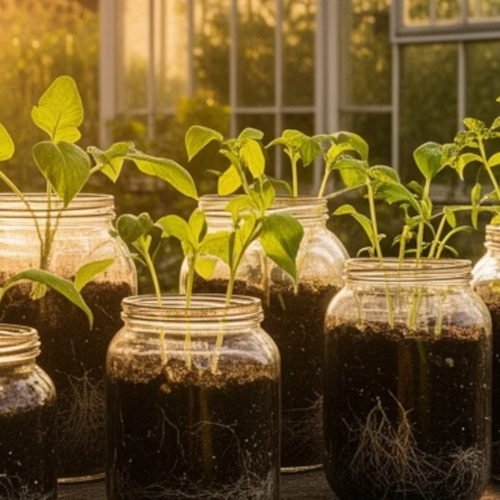
Plant And Mushroom Clones: A Masterclass In Asexual Propagation
April 28, 2026
Asexual propagation is often viewed as a cheat code for gardeners and mycologists alike. By bypassing the genetic lottery of seeds and spores, you can create exact biological replicas of your most vigorous specimens. Whether you are aiming to preserve a specific cannabis strain's terpene profile or scale up a high-yielding Lion's Mane mushroom, mastering the art of plant and mushroom clones is the most efficient way to ensure consistency in your harvest.
Part 1: Plant Cloning (Vegetative Propagation)
The magic of plant cloning lies in totipotency — the ability of a single plant cell to divide and produce all the differentiated cells of a new organism. When you take a cutting, you are essentially tricking the stem into becoming a root system.
Selecting Your Mother Plant
Success starts with the source. Your mother plant should be in peak health, free of pests, and ideally in its vegetative (non-flowering) stage. Stressed plants produce clones with weak immune systems and slow rooting times.
The Standard Cutting Procedure
- The Cut: Using a sterilized blade, take a 4-6 inch cutting at a 45-degree angle just below a node (the bump where leaves emerge). This angle increases the surface area for water uptake.
- Node Preparation: Remove the bottom leaves. You want a clean stem to insert into your medium, but leave 2-3 leaves at the top to facilitate photosynthesis.
- Hormonal Boost: Dip the fresh cut into organic rooting hormone or stimulant, such as that available in willow water (water infusion of bark), aloe vera gel, or coconut water. This chemical signal tells the plant to stop growing leaves and start growing roots.
- The Environment: Place the cutting in a high-humidity environment, such as a propagation tray with a clear dome. Since the cutting has no roots yet, it must breathe water through its leaves.
Part 2: Mushroom Cloning (Mycelial Expansion)
While plants use stems, mushrooms use mycelium. Cloning a mushroom involves taking a piece of internal tissue from a fruiting body and placing it onto a nutrient-rich organic growing media, such as agar.
The Sterile Technique
Unlike plants, mushroom tissue is highly susceptible to mold and bacteria. The use of a Still Air Box (SAB) may therefore be ideal, but unnecessary.
- Tissue Sampling: Take a fresh mushroom and tear it open by hand (rather than cutting) to expose 'virgin' interior tissue that hasn't been exposed to outside air.
- The Transfer: Using a flame-sterilized scalpel, carve out a tiny 2 mm square of the internal flesh.
- Agar Inoculation: Place this tissue onto a sterile Petri dish filled with malt extract agar (MEA), potato dextrose agar (PDA), or pasteurized organic mushroom substrate.
- Incubation: Within 3-7 days, white, thread-like strands of mycelium will begin to reach out from the tissue, colonizing the plate.
Part 3: Optimized Growth Environments
The bridge between a tiny cutting or a sliver of mycelium and a fully grown organism is environmental control. For plant and mushroom clones, the first 14 days are the danger zone.
For Plants:
- Light: Soft, cool-spectrum light (sunlight, CFL, or LED) is best. Avoid high-intensity HID lights, which can wither unrooted cuttings.
- Temperature: Aim for 70-75°F. A heat mat under the tray can significantly speed up root development.
For Mushrooms:
- Light: Most mycelium prefers total darkness during the colonization phase.
- Gas Exchange: Mycelium breathes oxygen and exhales CO2. While the Petri dish should be sealed with parafilm to prevent contamination, it must still allow for microscopic gas exchange.
Part 4: Troubleshooting Common Failures
If your plant or mushroom clones are struggling, it usually boils down to three culprits: contamination, moisture, or temperature.
In plant cloning, damping off (a fungal disease) occurs if the medium is too soggy. The stem will turn mushy and brown at the base. In mushroom cloning, the most common heartbreak is Trichoderma — a bright green mold that outcompetes your mycelium. If you see green, the plate must be discarded immediately.
Cloning is a skill of observation. The more you practice, the more you will recognize the subtle signs of a successful take, from the first fuzzy root hair to the rhythmic rhizomorphic reach of healthy mycelium.
Pro Tip: When cloning mushrooms, always take samples from the base of the stem where it meets the cap; this area often contains the most vigorous cellular activity for rapid colonization.
Organic Gardening Guide
Grow organic food at home. Step-by-step preparation, cultivation, and harvesting guide. Don't leave your food security to chance. Learn how to transform your backyard into a high-yield organic oasis.
Get Your Copy Today!