Harvesting Mushrooms: From Spores To Fruits
May 01, 2026
Mushroom cultivation is a fascinating blend of biology, patience, and art. Whether you are a hobbyist looking to grow gourmet oyster mushrooms in your kitchen or an aspiring mycologist studying fungal genetics, understanding the lifecycle of fungi is crucial. To succeed, one must master the techniques for harvesting mushrooms at every stage of their development. This article explores the delicate process of collecting spores, buds (primordia), fragments, and mature fruits, to ensure a sustainable and productive harvest.
Understanding The Fungal Lifecycle
Before diving into the how-to, it is essential to understand that what we call a mushroom is merely the reproductive organ of a much larger organism: the mycelium. Think of the mycelium as the underground tree and the mushroom as the apple.
When harvesting mushrooms, you are interacting with a complex network that relies on specific environmental triggers to transition from vegetative growth to reproductive fruiting.
Harvesting Spores: The Genetic Blueprint
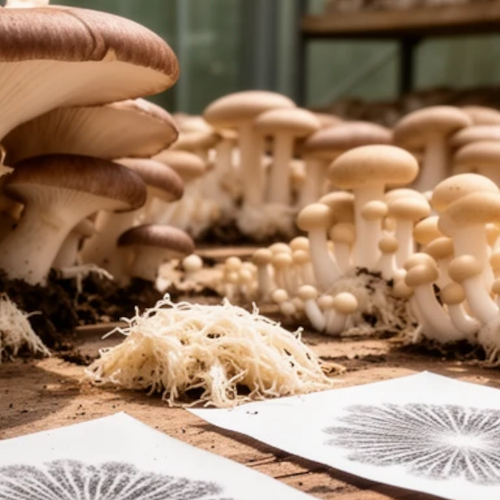
Spores are the microscopic seeds of the fungal world. Harvesting them allows you to create spore prints, which are essential for identification and long-term storage of genetics.
- How to Harvest: Select a mature mushroom with an open cap where the gills or pores are visible. Sever the stem close to the cap and place the cap gill-side down on a piece of heavy paper or a glass slide.
- The Wait: Cover it with a glass jar to prevent drafts and wait 6-24 hours. When you lift the cap, a beautiful print of spores will remain.
Pro Tip: Use sterile techniques. A laminar flow hood or a still-air box can prevent mold spores from contaminating your collection.
Harvesting Buds (Primordia)
In the mycological world, buds are known as 'primordia' or 'pins'. These are the tiny, dense knots of mycelium that signal the beginning of mushroom formation. While you usually want these to grow into full fruits, there are times when harvesting them is necessary — for example, when thinning a cluster to allow for larger individual specimens or for specific culinary micro-mushroom uses.
When harvesting mushrooms at the pinhead stage, use fine tweezers or sharp surgical scissors. This prevents pulling up the surrounding substrate, which could stall the growth of neighboring pins.
The Art Of Tissue Fragments
Sometimes, you don't want to start from scratch with spores; you want a genetic clone of a particularly large or delicious specimen. This is where harvesting tissue fragments comes into play.
Cloning With Fragments
By taking a small internal piece of a mushroom's flesh and placing it on an agar plate, you can bypass the unpredictable nature of sexual reproduction (spores) and jump straight into vegetative growth.
- Sanitize: Clean the exterior of the mushroom with 70% isopropyl alcohol.
- Tear, Don't Cut: Tear the mushroom cap in half to expose clean, unexposed inner tissue.
- Extract: Using a sterile scalpel, remove a tiny 2 mm fragment of the internal flesh.
- Transfer: Place this fragment onto a nutrient-rich agar dish.
This method of harvesting mushrooms — or rather, harvesting their DNA — is the backbone of professional mushroom farming.
Harvesting Mature Fruit Bodies
The most rewarding part of the process is gathering the fully grown fruits. However, timing is everything. If you harvest too early, you lose out on yield; if you harvest too late, the mushrooms become woody, lose flavor, and drop a messy layer of spores everywhere.
Knowing The Sweet Spot
For most common varieties like Oyster, Lion's Mane, or Shiitake, the best time for harvesting mushrooms is just before the edges of the cap begin to flatten out or curl upward.
- Oyster Mushrooms: Harvest when the largest cap in the cluster is starting to level off.
- Button/Cremini: Harvest while the veil (the membrane under the cap) is still intact.
- Lion's Mane: Harvest when the teeth (the icicle-like spines) are about 1/4 inch long.
Techniques: Twist Or Cut?
There is an age old debate in the foraging community: should you twist the mushroom out of the ground or cut it at the base?
- Cutting: Using a sharp knife reduces the amount of debris (dirt/substrate) you bring indoors.
- Twist And Pull: This is often better for species like Agaricus, as it ensures no stump is left to rot and potentially attract pests.
Regardless of the method, the goal of harvesting mushrooms should always be to minimize disturbance to the underlying mycelial mat.
Post-Harvest Care And Sustainability
Once you have finished harvesting mushrooms, the work isn't quite done. To encourage a 'second flush' (another crop from the same block), you must rehydrate your substrate. Submerge your fruiting block in cold filtered water for several hours, to signal to the mycelium that it’s time to produce more fruits.
By mastering the collection of spores, the precision of fragment cloning, and the timing of the final fruit harvest, you become a participant in the incredible life cycle of fungi rather than just a consumer.
Organic Gardening Guide
Grow organic food at home. Step-by-step preparation, cultivation, and harvesting guide. Don't leave your food security to chance. Learn how to transform your backyard into a high-yield organic oasis.
Get Your Copy Today!