Nutrient Requirements Of Plants And Mushrooms
April 13, 2026
To grow a thriving garden or a bountiful fungi harvest, one must look beneath the surface. While they often share the same growing media, the nutrient requirements of plants and mushrooms are worlds apart. Plants are the solar powered engineers of the natural world, while mushrooms are the master recyclers. Understanding how these two kingdoms feed — and how organic nutrient sources like compost bridge the gap — is the secret to a truly regenerative ecosystem.
The Biological Divide: How They Feed
The fundamental difference in the nutrient requirements of plants and mushrooms lies in their metabolic philosophy. Plants are autotrophs; they build their own food from thin air and light. Using photosynthesis, they convert carbon dioxide and water into glucose. Their roots act as straws, pulling up a specific nitrogen-phosphorus-potassium ratio (NPK) to facilitate this complex chemical factory.
Mushrooms, conversely, are heterotrophs. They cannot eat sunlight. Instead, they digest the world around them, by secreting powerful fungal enzymes into their environment. These enzymes break down complex polymers like lignin and cellulose into simpler sugars. For a grower, this means mushroom substrate preparation is less about light and more about providing high carbon materials that the mycelium can dismantle.
Essential Nutrients For Thriving Plants
Plants require a steady diet of bioavailable plant minerals to complete their life cycle. While nitrogen (N) promotes lush green foliage, phosphorus (P) is the engine behind root development and flowering, and potassium (K) regulates water movement and disease resistance.
However, the nutrient requirements of plants and mushrooms also include micro needs. Secondary nutrients like calcium and magnesium are essential for cell wall integrity. In a modern garden, focusing on regenerative soil health ensures these minerals aren't just present, but are in a form the plant can actually grab.
Pro Tip: If your leaves are yellowing between the veins, you might have a magnesium deficiency. Instead of synthetic sprays, consider slow release organic fertilizer like kelp meal.
What Do Mushrooms Actually Eat?
When we discuss mushroom substrate preparation, we are talking about creating a feast for mycelium. Unlike plants, mushrooms need a massive amount of carbon. This is why they thrive on wood chips, straw, or coffee grounds.
While plants need a high nitrogen environment to grow tall, a high carbon-to-nitrogen ratio for fungi is vital. If there is too much nitrogen, the mycelium may burn or become overwhelmed by competing bacteria. The nutrient requirements of plants and mushrooms overlap most in their need for moisture and specific trace minerals, but the mushroom's reliance on dead organic matter makes it the ultimate partner in the decomposition cycle.
Compost: The Ultimate Organic Nutrient Source
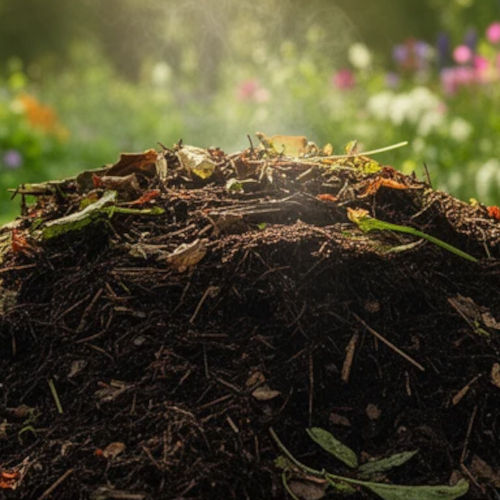
If you want to satisfy the nutrient requirements of plants and mushrooms simultaneously, look no further than closed-loop composting. Compost is the great equalizer. It takes raw waste and transforms it into a dark, crumbly gold, rich in humic acid.
- For Plants: Compost provides a buffet of trace minerals for gardening and improves soil structure, allowing roots to breathe.
- For Mushrooms: While mature compost is often too decomposed for some mushroom species, active or partially decomposed compost is a playground for others, like the common Button or Portobello mushroom.
Using organic nutrient sources like compost ensures that you aren't just feeding the organism; you are feeding the soil microbiome. By applying compost tea for vegetables, you introduce beneficial microbes that unlock nutrients already present in the dirt, making them more bioavailable.
The Synergy Of Spent Mushroom Substrate
One of the most overlooked sustainable garden amendments is spent mushroom substrate. After a mushroom harvest, the leftover material is teeming with broken-down organic matter and beneficial fungal hyphae. This material is a powerhouse for plant growers. Because the mushrooms have already done the hard work of breaking down tough carbon sources like straw, the remaining nutrients are incredibly easy for plants to absorb.
Integrating this into your regenerative soil health plan completes the circle. You feed the mushrooms the raw carbon, and they pre-digest it for your tomatoes and peppers. This is the essence of closed-loop composting.
Balancing Your Ecosystem
Understanding the nutrient requirements of plants and mushrooms allows you to stop fighting nature and start collaborating with it. Whether you are experimenting with vermicomposting for beginners or fine tuning your nitrogen-phosphorus-potassium ratio, the goal remains the same: a healthy, self-sustaining system.
By choosing organic nutrient sources over synthetic alternatives, you preserve the delicate balance of the earth. You aren't just a gardener or a mushroom cultivator; you are a steward of the decomposition cycle, ensuring that life continues to bloom from the very things that some may consider waste.
Organic Gardening Guide
Grow organic food at home. Step-by-step preparation, cultivation, and harvesting guide. Don't leave your food security to chance. Learn how to transform your backyard into a high-yield organic oasis.
Get Your Copy Today!